

For many of us, travel is far more than simply ticking off famous sights. It’s the longing for freedom, the willingness to embrace the unknown, and the gathering of moments that leave a lasting impression. Yet in today’s world, we increasingly ask ourselves: how can we explore the diversity of our continent without leaving a massive ecological footprint? The answer often lies right on our doorstep — or rather, on the rails.
If you’d like to travel more sustainably this year, travelling by train is the perfect way to combine a slower pace with a sense of adventure. In our guide “Sustainable Travel: Tips for 2026”, we’ve already shown how important mindful choices are when it comes to getting from A to B.
And that’s exactly where a classic comes into play — one that’s more relevant than ever: Interrail. But how does this legendary European rail pass actually work? In this article, we shed some light on the subject and show you how Interrail is explained, so your next adventure can get off to a stress-free start.
What Is Interrail, Exactly?
When people think of Interrail, they often picture backpackers hopping aimlessly from one train station to the next. But behind the name lies a highly modern, flexible ticketing system that lets you travel almost the entire European rail network with just a single ticket.
It’s the ultimate invitation to slow travel — the art of travelling mindfully and unhurriedly, where the journey itself becomes the destination. Rather than flying past the most stunning landscapes, you move at your own pace from city to city. Before you write your packing list, though, it’s worth getting to grips with the basic ticket options.
One Ticket for 33 Countries: The Global Pass vs. the One Country Pass
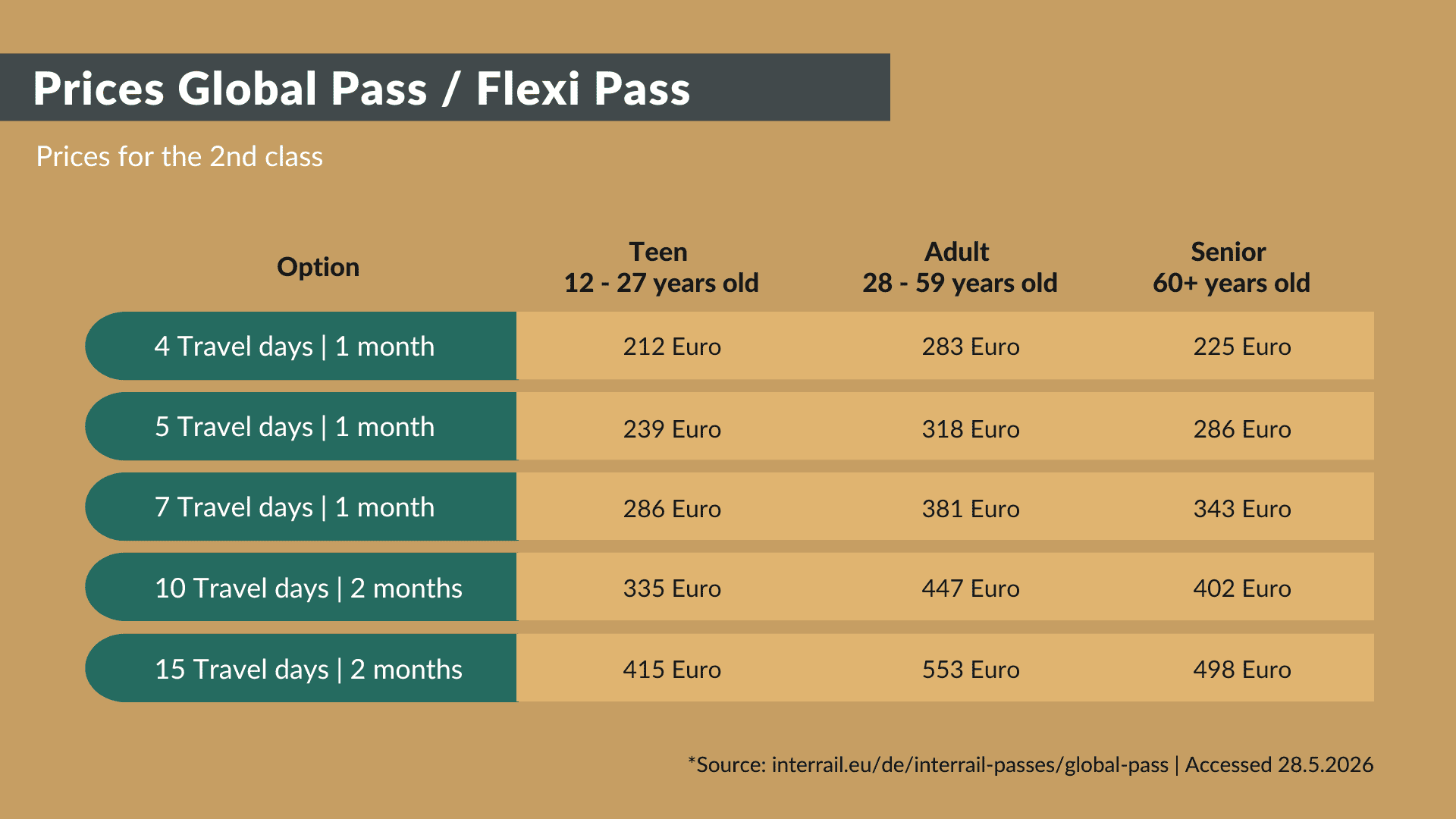
The centrepiece of the offering is the Interrail Global Pass. With this ticket, you have access to trains run by more than 40 railway companies across 33 European countries. Whether you’re heading off to explore Europe’s top city breaks or seeking untouched natural landscapes well off the beaten track — the Global Pass keeps all your options open.
If, on the other hand, you’d prefer to immerse yourself deeply in a single region, the One Country Pass is the right choice. It’s valid exclusively on the rail network of one specific country (e.g. Italy or France). The principle of flexible train travel through Europe remains the same for both options — you simply need to decide on your geographical scope or route in advance.
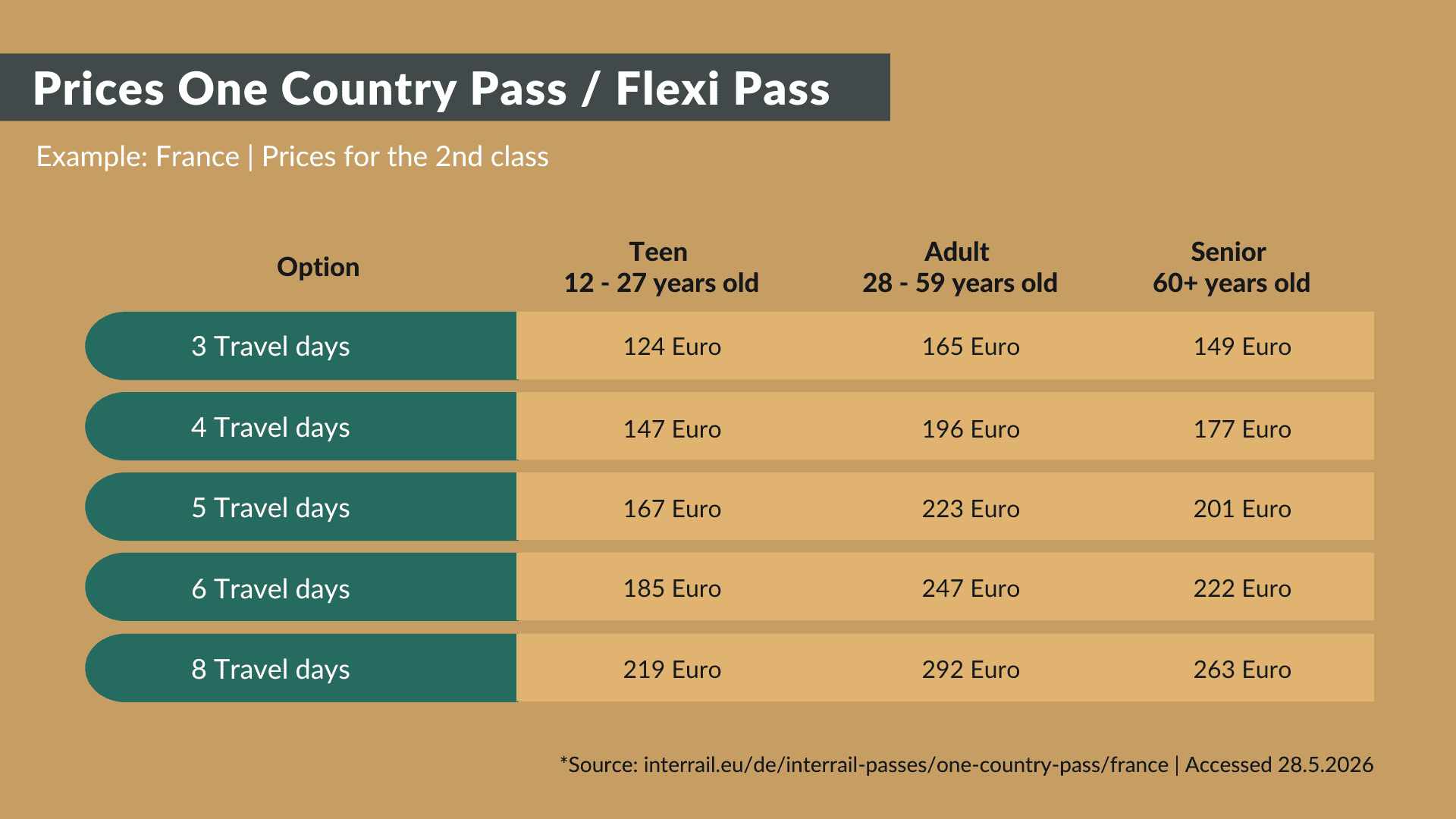
Note: A seat reservation may be required at an additional cost for some trains. Travel days can be used at any point within 1 month of the start date.
💡 Extra savings tip: Check local ticket alternatives!
Before blindly opting for a One Country Pass, it’s often worth checking what the national rail operators have to offer. Many countries provide their own incredibly affordable all-you-can-travel tickets. In Italy, for example, Trenitalia offers Promo Italia in Tour. This lets you travel unlimited on all regional trains for a few days — often cheaper than the official Interrail pass for a single country. So do your research and look carefully at your route beforehand!
Who Is the Pass Worth It For? (Age Groups & Discounts)
One widespread myth is that Interrail is only for recent school-leavers or students. That’s simply no longer true! In principle, anyone can buy an Interrail Pass, regardless of age. What is true, however, is that there are attractive discount tiers that make the pass particularly affordable for young adults.
Travellers aged up to 27 receive a generous youth discount. So if you’re between 18 and 35, it’s well worth taking a close look at the pricing tables. Families benefit too: children under 12 travelling with an adult often ride completely free of charge. The pass adapts perfectly to your budget, making a flexible train journey through Europe accessible and affordable.
How Does Interrail Work? The Travel Days Principle
The biggest hurdle for Interrail newcomers is usually getting to grips with the logic behind the ticket. Many people ask: can I just hop on any train for weeks on end? The answer is: it depends entirely on how you want to shape your adventure. The entire system is based on so-called “travel days” within a defined validity period.
A travel day always runs from 00:00 to 23:59 on the same calendar day. Within those 24 hours, you can change trains and cover as many kilometres as you like. But be careful: this does not mean you should hop off at every intermediate station for a few hours without a plan. If you break your journey and travel on again the following day, that immediately uses up a second precious travel day!
Spontaneous stopovers on the same day are most worthwhile on routes covered by regional trains. As soon as you’re planning long distances and need high-speed trains like the TGV in France, you’ll need to factor in your stops in advance anyway, as seat reservations are compulsory on these services. The system still invites you to travel slowly — but mindfully: you travel deliberately from place to place and stay longer, rather than rushing frantically from train to train. To make the most of your budget, you’ll need to choose between two models when you purchase.
Flexi Pass vs. Continuous Pass: Which One Suits You?
With the Interrail Global Pass, you’re faced with a choice between two ticket types that adapt to your travel style:
- The Flexi Pass (e.g. “7 days within 1 month”): This is the firm favourite for most backpackers. Within a month, you have exactly 7 freely chosen days on which you can use the train. The days in between are spent relaxing in cities, exploring on foot, or enjoying nature — without your ticket ticking away.
- The Continuous Pass (e.g. “15 consecutive days”): With this pass, every day within the chosen period is automatically a travel day. It’s perfect if you’re planning a major journey across Europe and want to cover long distances on almost every day, seeing an incredible amount in a short space of time.
Which pass suits you depends on your ideal route. If you want to immerse yourself deeply in the culture of individual places, the Flexi Pass is your best friend. If you’re drawn to a new destination every morning, go for the Continuous option.
Can I Use Interrail in My Own Home Country?
A question many people ask before booking: Can I actually board a train at home, or does the ticket only become valid once I cross the border?
The good news is: you can travel through your home country with the Interrail Pass! However, there is an important special rule to prevent the ticket from being used as a cheap commuter pass. Every Global Pass includes exactly one outbound journey and one inbound journey within your country of residence.
Both of these journeys must take place within your regular travel days. So you can perfectly comfortably board a domestic train at your local station, head towards the border or the nearest major rail hub, and begin your adventure.

From Booking to the Platform: Using the Rail Planner App
The days of standing on the platform clutching a bulky paper pass and a thick timetable booklet are well and truly over. Today, your entire European adventure runs digitally. That might sound complicated at first, but it actually makes you incredibly flexible on the road.
The essential tool for your journey is the official, free Rail Planner App. It functions as a timetable, ticket manager, and route planner all in one. Modern train travel through Europe is virtually impossible without it — but don’t worry, it’s actually quite intuitive to use.
The Digital Mobile Pass on Your Smartphone
When you purchase your Interrail Pass online, you no longer receive a letter in the post. Instead, you get a confirmation email containing a pass number. Simply load this number into the Rail Planner App on your smartphone, and your digital Mobile Pass is ready to go.
The biggest advantage: you don’t need to commit to an exact start date when you buy. From the date of purchase, you have eleven months to activate your pass in the app. When you activate it, you enter your journey’s start date and link the pass to your ID number.
From that moment on, your smartphone is your valid ticket. If your phone loses signal whilst you’re travelling, that’s no problem at all: the Mobile Pass works perfectly offline when shown to the conductor on the train. You simply need to go online briefly once every three days so the app can update the validity.
Planning Routes and Adding Journeys Made Easy
The app takes all the searching out of finding connections. Simply enter your departure point and destination, and the app shows you all available trains — across Europe and in real time. You can also see straight away whether a seat reservation is compulsory for a particular train, or whether you can just hop on.
The most important principle when travelling with the Mobile Pass is: add your journey first, then board! Before you step onto the platform, you must add the desired connection to your trip in the app and activate the small toggle. Only then is a travel day activated for that day, and a QR code generated for the conductor to scan.
This digital flexibility fits perfectly with a mindful approach to travel. If you find yourself falling so in love with a city that you want to stay longer, simply delete the planned journey with a tap before departure and add it for a later day.
The Small Print: Seat Reservations
Let’s be honest: seat reservations are the point at which most Interrail newcomers come close to throwing in the towel. You buy a ticket for all of Europe and then discover that you still need to pay extra for many trains. That feels unfair at first glance and raises the question: isn’t that just a hidden rip-off?
Don’t worry — it isn’t. But you do need to understand the system to avoid any nasty surprises on the platform. The rule of thumb is: your Interrail Pass is your general travel permit, but in many countries it does not guarantee you a seat on the train.
For popular or particularly fast services, railway companies charge an additional fee. If you want to keep your Interrail costs under control, you need to know exactly when you’ll need to pay extra and when you won’t.
When Is the Pass Enough, and When Does It Cost Extra? (Night Trains & High-Speed)
In countries like Germany, Austria, or Switzerland, travelling is genuinely uncomplicated: you simply board an ICE, IC, or regional train, find a free seat, and off you go. A reservation is optional here.
Things are different as soon as you cross borders or travel in certain countries in south-western Europe. An Interrail seat reservation is almost always compulsory (and costs extra) in the following cases:
- International high-speed trains: Trains such as the Eurostar (between London, Paris and Brussels) have limited Interrail allocations. Here you often need to book months in advance and should expect to pay an extra €10 to €30 per journey.
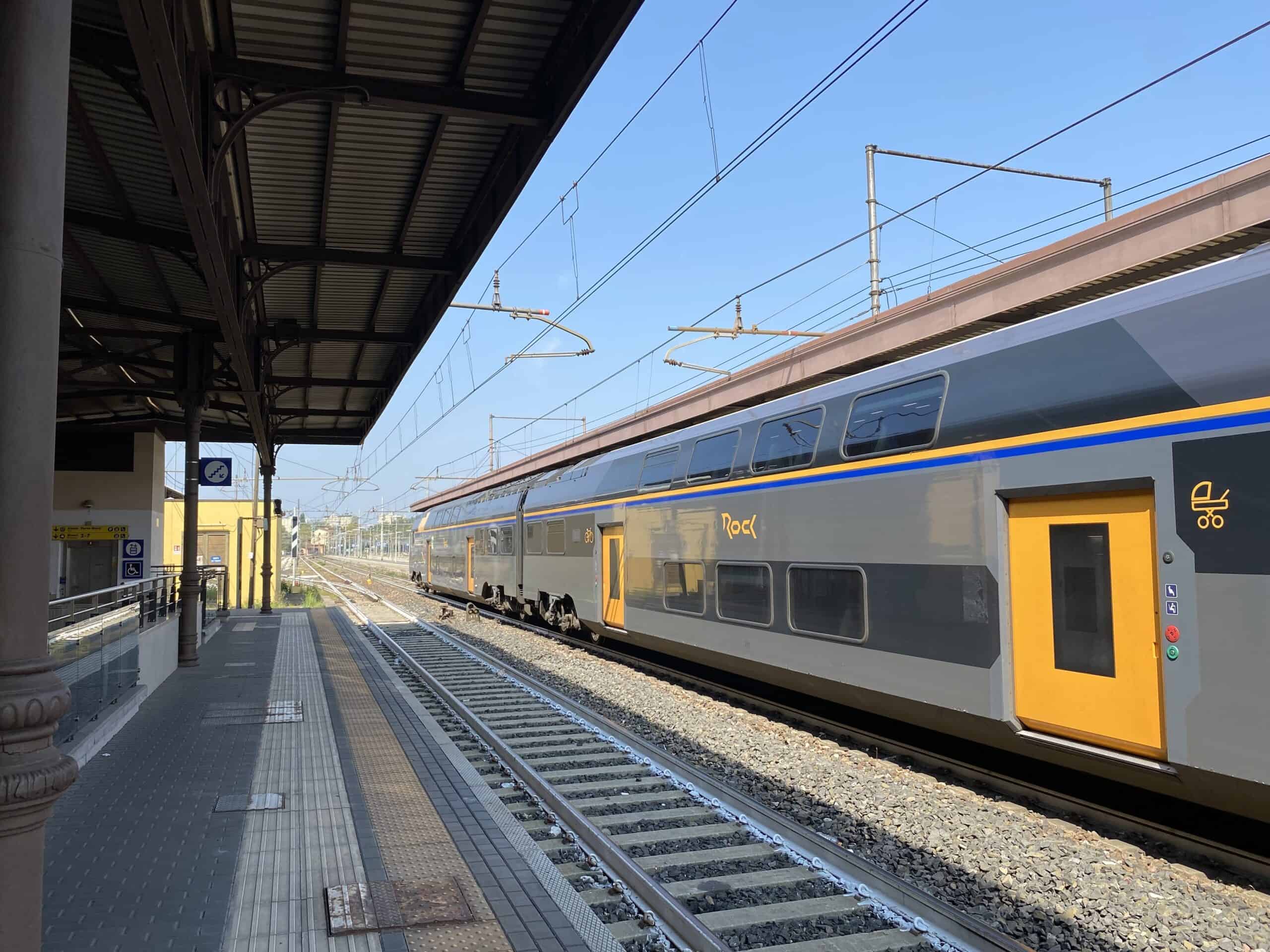
- Domestic high-speed trains: In France (TGV), Italy (Frecciarossa), and Spain (AVE), reservations are without exception compulsory on long-distance services. Fees are typically between €10 and €13.
- Night trains (e.g. ÖBB Nightjet): If you want to travel while you sleep to save on hotel costs, you’ll always need to pay a supplement for a couchette or sleeper compartment. Depending on the comfort class, this ranges from €14 (seat) to over €100 (private sleeping cabin).
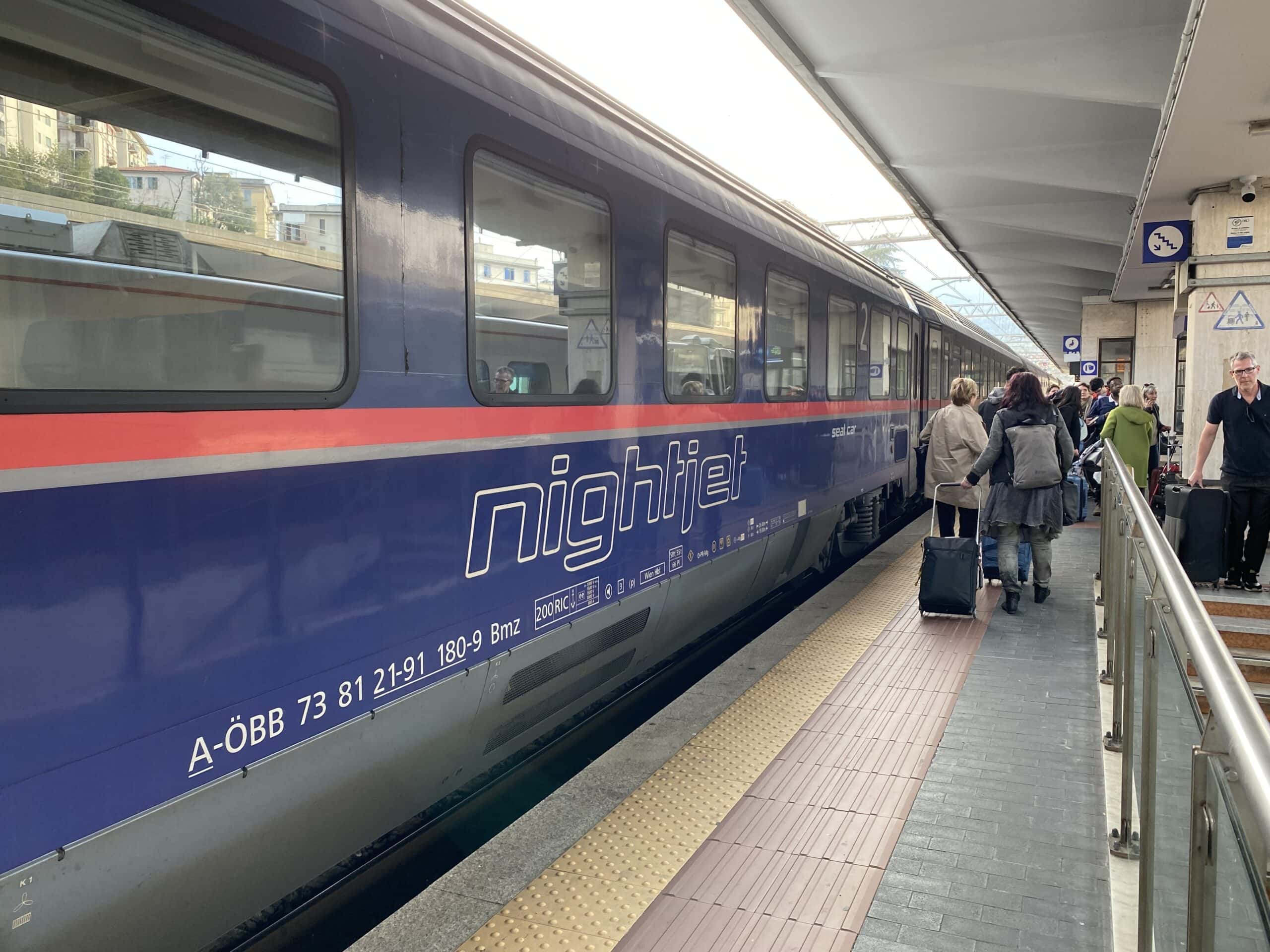
Image: © Private Alice Gossrau
Saving Money on Your Interrail Trip: Using Routes Without Mandatory Reservations
The good news is: you’re not helpless in the face of these extra costs. You can protect your budget by planning your route cleverly and deliberately choosing routes with no compulsory reservation.
The Rail Planner App has a brilliant filter for exactly this: simply tick the box for “No reservation required”. The app will then find you alternative routes that run exclusively on regional and inter-regional trains. Instead of racing through the expensive TGV from Paris to Marseille, you’ll meander a little longer through beautiful French villages — but that’s exactly what makes genuine train travel through Europe and the charm of slow travel so special!
Eastern Europe is also an absolute paradise for budget travellers: in countries like Czechia, Hungary, or Poland, reservations — where they’re needed at all — often cost just one or two euros. So if you want to travel flexibly through Europe on a budget, it’s well worth looking beyond the classic western metropolises towards the hidden gems of the East.
A Step-by-Step Guide to Your European Adventure
Now you have the theory under your belt, you know the difference between the passes, and you know how to avoid extra costs. But where do you actually begin?
Don’t worry — the planning is no great mystery, as long as you approach it in a structured way. To make sure nothing goes wrong from first idea to first step on the train, we’ve broken it down into four simple steps.
Step 1: Sketch Out Your Route & Choose Your Pass
Before you pack your suitcase or rucksack, think about a rough outline of your dream route. Which cities or regions do you absolutely want to visit? Are you drawn to Europe’s great metropolises or the beaches of the Mediterranean, or does the quiet, rugged North call to you more?
Once your desired destinations are fixed, estimate the number of days you’ll actually spend on the train. That will determine which Interrail Pass is right for you. Do you travel a lot on regional trains and like to linger in one place? Then go for the Flexi Pass (e.g. 5 or 7 days within a month). Do you want to cover a huge distance in a short time? Then choose the Continuous Pass.
Step 2: Buy Your Pass and Activate It in the App
Once you’ve decided on a pass, it’s best to buy it directly on the official Interrail website. Straight after purchase, download the free Rail Planner App onto your smartphone. Enter your pass number in the app to create your digital Mobile Pass.
Important: You don’t need to activate the pass immediately. It’s best to do so shortly before your departure or on the day of your first journey. When activating, enter your exact start date and link the ticket to your passport or national ID number. From this point, your digital ticket is ready to use.
Step 3: Book Compulsory Reservations in Good Time
This is the step that requires the most planning: check your route in the app and verify whether a seat reservation is compulsory for your intended trains.
Especially if you’re travelling in peak season (summer), on the TGV in France, on the Eurostar, or on night trains, you should book these reservations several weeks — sometimes even months — in advance. Reservations can usually be made directly via the Interrail self-service tool, the websites of the respective national rail operators, or at the ticket desk at your local station. Once you’ve saved all your reservation tickets as PDFs on your smartphone or in your wallet, you’re all set for a relaxed journey.
Note: A small number of Eastern European countries (such as some trains within Romania or Bulgaria) and certain international night trains (e.g. the ÖBB Nightjet) still have conductors who collect physical slips to check berth allocations.
For Western, Northern, and Southern Europe (France, Italy, Spain, Scandinavia, etc.), you are perfectly equipped going purely digital.
Step 4: Board, Show Your Ticket, and Enjoy!
The big day has arrived: you’re on the platform and the train is pulling in. Now the golden Interrail rule applies: add your journey first, then board!
Find your connection in the Rail Planner App and tap the toggle to add the journey to your trip. Only then is the QR code for the conductor generated. Once on board, make yourself comfortable. When the ticket inspector comes, simply show the QR code in your app and — if required — your photo ID and seat reservation. This is the moment to lean back and truly slow down: the journey is the destination, as Europe’s landscapes glide past your window.
Conclusion: Why Interrail Is the Best Way to Discover Europe
In the end, Interrail is so much more than a simple train ticket. It’s a way of life. In a world so often defined by hectic schedules and the drive for maximum efficiency, travelling by rail gives back the most precious commodity of all: time. Time to appreciate how the landscapes change. Time to strike up a conversation, read a good book, or simply gaze out of the window as the world drifts by.
If this year you’re actively looking for ways to put sustainable travel into practice, then Interrail is perhaps the most profound answer to that question. You drastically reduce your CO₂ footprint whilst gaining the maximum amount of flexibility. No stressful security queues at overcrowded airports, no endless motorway tailbacks — instead, you begin your adventure right in the heart of some of our continent’s finest cities.
Now that Interrail has been explained and you understand the system behind travel days and reservations, the rest is up to you. Whether it’s a long weekend up north, or the grand dream of a multi-week rail journey across Europe: the tracks are yours. Pack your rucksack, download the Rail Planner App, and let Europe surprise you. It’s waiting for you!

Alice
Alice studied business administration and worked for an agency in Cologne for three years. At the beginning of 2022, she decided to pursue a new career path with a focus on sustainability. She loves to travel and dreams of swimming with humpback whales in the Pacific Ocean.

Wer steckt hinter give & grow?
Job gekündigt, Welt bereist und auf einer Mission internationales Volunteering und Reisen zu revolutionieren. Kathrin ist Kopf und Herz von give & grow. Die gesamte Geschichte und was dahinter steckt kannst du hier nachlesen.
Denn auf Augenhöhe zu reisen verändert alles.
#reshapetravel
Du willst sinnvoll helfen und nachhaltig reisen?
Lerne in unseren Online Kursen wie du nachhaltig reisen kannst.